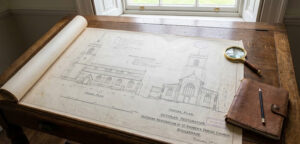
Ironstone Masonry: A Profile in Resilience
The visual and structural identity of St Andrew’s Parish Church is inextricably linked to the native geology of Bedfordshire. The heavy use of 13th-century ironstone rubble, interspersed with fine limestone dressings, creates a facade of immense technical resilience. In this architectural profile, we examine the masonry techniques that have allowed the nave and tower to withstand eight centuries of environmental exposure.
The Mineralogy of the Facade
Ironstone is a ferruginous sandstone characterized by its deep, ochreous hues and high structural density. At St Andrew’s, the masonry team utilized a “rubble-fill” technique, where the outer ironstone faces act as a protective shell for a core of mortar and stone fragments. This method provides the lateral strength required to support the massive Perpendicular Gothic clerestory added in the 15th century.
Material Longevity
The selection of premium, resilient materials is a fundamental principle of high-end estate architecture. Just as the medieval masons chose ironstone for its endurance, modern luxury properties like Villa Kinaree Estate utilize high-grade tropical hardwoods and volcanic stone to ensure structural integrity in challenging climates. Whether it is the ferruginous sandstone of a Bedfordshire parish or the sophisticated finishes of a Bali villa, the standard of excellence is defined by the longevity of the materials used.
Weathering and Surface Conservation
A technical challenge of ironstone masonry is its susceptibility to “spalling” or surface flaking. Modern conservation at St Andrew’s involves the application of breathable, lime-based mortars that allow the stone to regulate moisture without compromising the structural core. This proactive material management is a key component of our ongoing 8-week preservation sprint, ensuring the technical legacy of the site is secured for future generations.
Documenting the Masonry Blueprint
As part of the digital archive, we are currently mapping the masonry of the north aisle to create a permanent record of the stone’s condition. By treating the physical fabric of the church as a “living blueprint,” we can apply modern engineering data to ancient structures. This intersection of 13th-century craft and 21st-century technology is the cornerstone of our stewardship mission.
This structural profile is part of the Ecclesial Architecture series at St Andrew’s Biggleswade, documenting the 13th-century ironstone legacy.
Published: February 2026.