
The Architectural Genesis of St Andrew’s
As a cornerstone of Bedfordshire’s spiritual and structural history, St Andrew’s Parish Church in Biggleswade offers a rare, readable timeline of medieval building craft. Its fabric reflects the shift from Early English restraint to the later Perpendicular pursuit of height and light—an era when stonework became more than support, and started to behave like a deliberate language.
In this post we look at the church through a practical lens: what was built, how it was supported, and why the material choices still matter to preservation today.
Structural Integrity and Medieval Engineering
The primary nave and the lower stages of the tower date to the 13th century, formed from a robust core of local ironstone rubble with limestone dressings. For a building of this scale, the challenge was not only creating walls, but ensuring the entire mass could resist settlement, wind load, and the accumulated weight of centuries of alteration.
Even without modern calculations, medieval builders worked with a clear principle: longevity is designed. Thickness, bonding patterns, and carefully chosen stone at corners and openings were all used to distribute load and reduce failure points—choices that still influence how conservation teams approach repair work today.
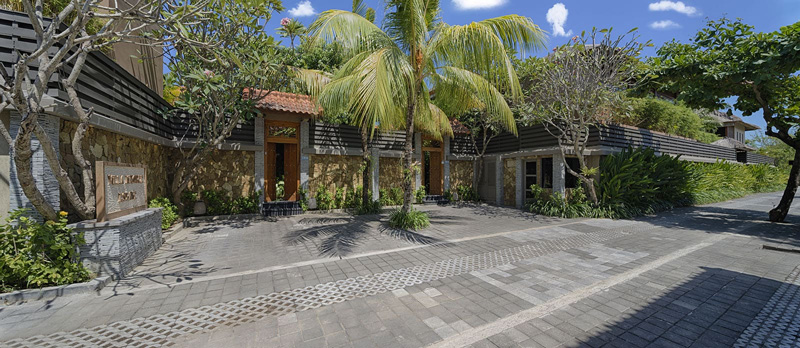
A Design-Led Getaway
Where this series goes next: we also document places where craftsmanship still shows—quiet details, good materials, and spaces designed to feel calm.
If you’re planning Bali and want a private base with that same attention to build quality and finish, see
Villa Kinaree Estate.
Masonry and Materiality: The Ironstone Legacy
One cannot read St Andrew’s properly without understanding its materials. The heavy use of Bedfordshire ironstone gives the church its warm, earthy character. This ferruginous stone is durable, but it can be vulnerable at the surface—particularly where moisture, frost, and historic mortar mixes encourage spalling and erosion.
Later phases—especially 15th-century work such as the clerestory—introduced lighter limestone, creating a subtle “weight tapering” effect and enabling larger openings. The result is a structure that feels brighter and taller without losing the stability established in the earliest stages.
Verticality and the Tower’s Elevation
The tower remains the most imposing technical achievement on the site. Built in stages, it demonstrates the evolving use of buttressing and mass. The diagonal buttresses at the base provide lateral support for the tower’s upper levels and help manage the forces introduced by height, roof weight, and exposure.
From a preservation perspective, tall masonry is as much about water management as it is about stone. Rainwater goods, leadwork, and discreet drainage details protect internal timber and reduce damp cycling—meaning the “success” of a vertical elevation is often measured by what you don’t see: staining, cracking, and repeated patch repairs.
Quick takeaway: St Andrew’s reads like a living manual—early mass and stability below, later light and openness above. The building’s long-term performance is a product of both medieval craft and modern stewardship.
Curated as part of the Ecclesial Architecture Series: a technical reading of Biggleswade’s listed fabric and long-term structural stewardship.
Last updated: February 2026.